Technical blueprint, Drawn in Ink
Lockheed U-2A
Lockheed U-2A
Couldn't load pickup availability
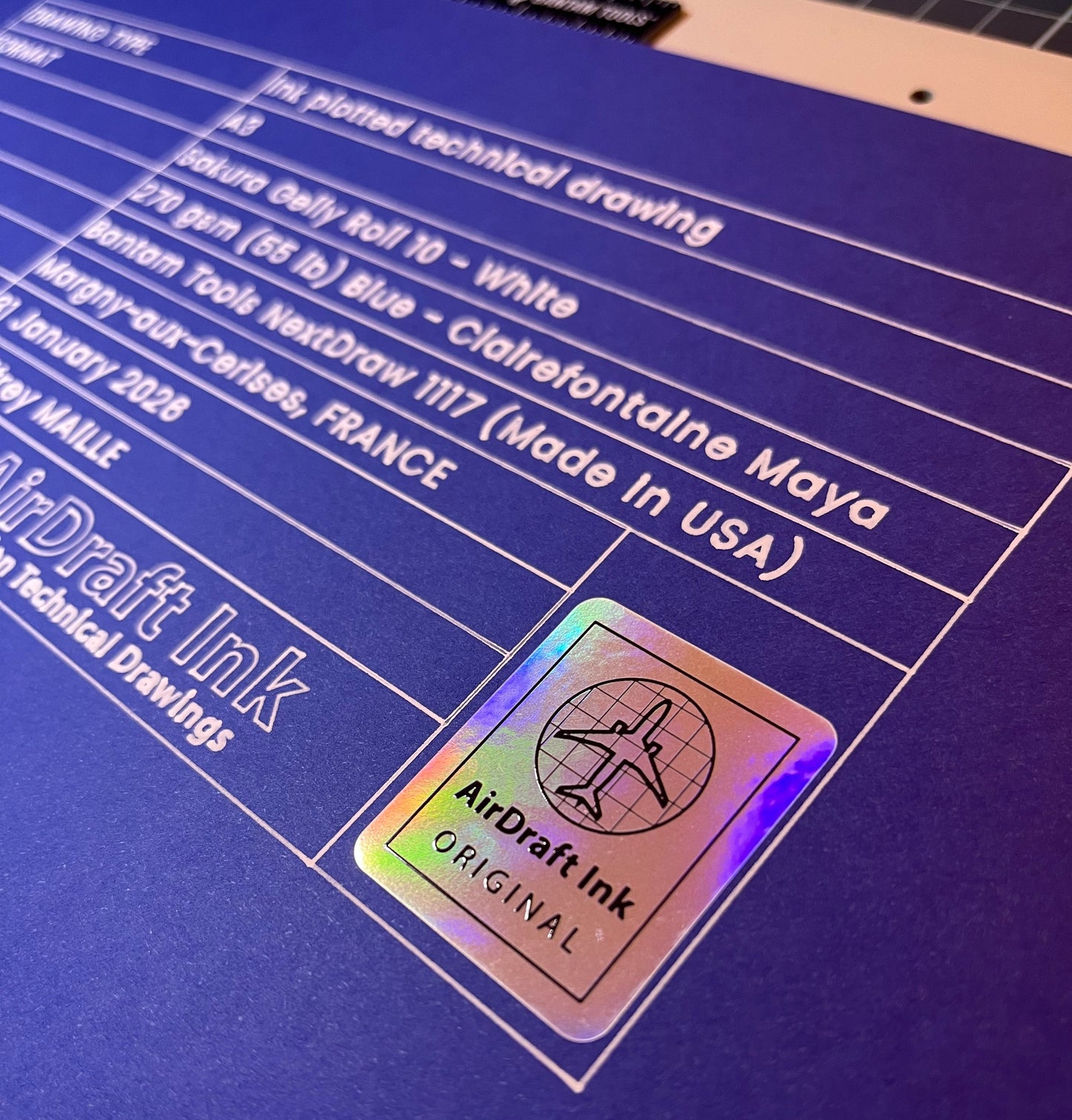
Format: A3 — 29.7 × 42 cm (11.7 × 16.5 in)
Pen type: Stabilo Point 88 or Sakura Gelly Roll pens
Paper: 270 gsm (55 lb) Clairefontaine Maya paper
Created with a NextDraw pen plotter - Frame not included
🇺🇸 The Lockheed U‑2A is a single-seat, high-altitude reconnaissance aircraft developed in the mid-1950s by Lockheed under the direction of Clarence 'Kelly' Johnson and the famous “Skunk Works” team. Designed for strategic intelligence missions during the Cold War, it is powered by a Pratt & Whitney J57 turbojet producing roughly 10,000 pounds of thrust. The aircraft’s extremely long glider-like wings allow it to reach altitudes above 70,000 ft (21,000 m), far higher than most fighters of its era, while cruising at around 475 mph (765 km/h). This capability enabled it to photograph and gather intelligence over vast distances while remaining out of reach of most air defenses.
The U-2 became internationally famous during the 1960 U‑2 Incident, when a U-2 piloted by Francis Gary Powers was shot down over the Soviet Union, triggering a major diplomatic crisis between the United States and the USSR. Despite the controversy, the U-2 proved to be one of the most important intelligence aircraft of the Cold War, providing critical reconnaissance during events such as the Cuban Missile Crisis and continuing to serve in upgraded forms for decades afterward.
